|
How-To and Why ->
Great Shaving Lather - Fast and Easy
It's all in the preparation
Great Shaving Lather, Fast and Easy
There are probably as many different techniques to developing a great shaving lather as there are men who use it. No doubt in time you’ll find the technique that you prefer or that works best for you personally, given the brush, soap or cream, and water conditions which you have to work with. But for now we’ll share with you the basics and suggest that you experiment and modify it as needed.
In the beginning there was water – And it was good, or at least it ought to be. Today water quality varies greatly from community to community, and often from house to house. Mineral content or “hardness” of the water has a great deal to do with developing a really great shaving lather, as do the multitude of water treatment processes used and the chemicals that are added to save our teeth or attempt to disinfect questionable quality water. As a rule, the harder the water, the harder it is to get a great lather. This situation accounts in large part for the differing results two people will get using the same soap in the same manner. It is not at all uncommon for one person to claim superior results while another is totally dissatisfied. We have even talked to some really unfortunate folks who must resort to using bottled water heated in a microwave oven for making shaving lather!
The second necessity to getting a great lather is the brush you use. Since we cover the subject of shaving brushes at some length in a separate article we will not repeat it here, rather we will presume the use of a good quality badger hair brush.
Generally speaking, cake type shaving soaps are easier to use and will provide consistently good results. The fact that they also tend to be less expensive than most creams is an added bonus. Of course, all soaps, or creams for that matter, are not created equal. A good quality shaving soap or cream will have ingredients specifically intended to produce a rich moist lather to soften the beard and moisturize the skin, and to provide lubricity to allow the razor to glide effortlessly and painlessly over the skin. If the soap or cream you are using fails on either of these counts the resultant lather will be less than optimal. Most readily available canned shaving foams fall far short.
You will find that the better quality the shaving lather and the more thorough the lathering technique, the fewer other products such as pre-shave conditioners, after shave balms, moisturizers, toners, etc. need be used. I like to equate shaving to painting your house. You could go to the hardware store and buy whatever paint is on sale and a $2.99 paintbrush, slap it on the walls and call it done. A professional painter would spend lots of time filling holes and cracks and smoothing imperfections, he will use only top quality brand-name paint that covers well and holds up for years, will apply it with, oddly enough, a premium quality Badger Hair Brush or Mohair Roller, and his result will be far superior and will easily justify his time and effort. Shaving is no different – The outcome is determined by the time and effort spent on preparation!
One other assumption that we will make for the purposes of this article is that you are shaving immediately after emerging from the shower. This is when your beard will be at its softest, and the best shaving results will be possible. When toweling off, leave your face wet. If necessary, add more hot water from the sink tap to keep your face wet while preparing your brush.
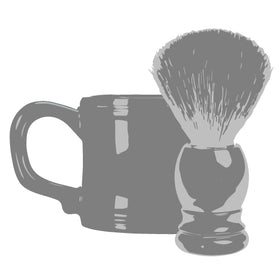
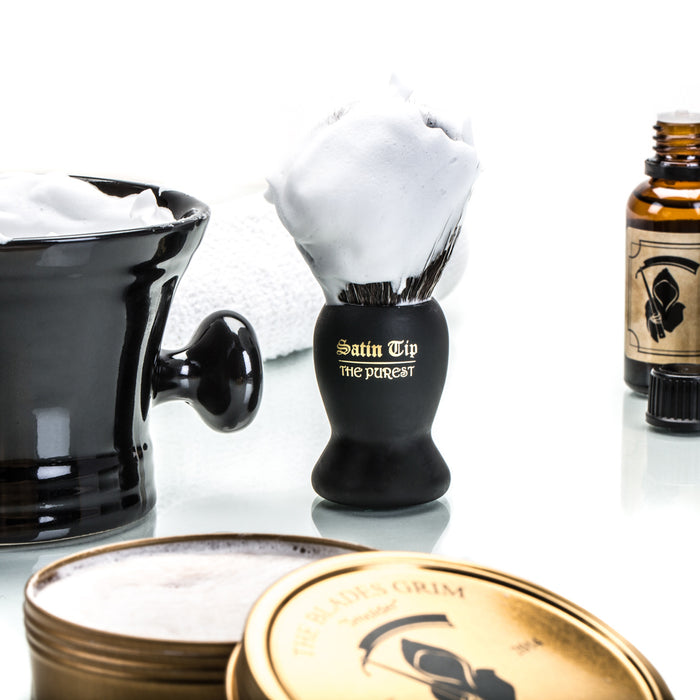
To begin, run the hot water until it gets as hot as possible. Hold your brush perpendicular to the stream of water, rotating it slowly, making sure to fully saturate the brush hair. This will become evident to you by the increased weight of the brush when fully saturated. Once warmed and loaded with all of the water it can hold, remove it from the stream of water and hold the brush “bristles downward” over the sink. Do not shake, tap, flick or otherwise cause it to drop the water. Allow it to drain only the excess water which the bristles are unable to hold. When the steady stream has stopped draining and all that remains is an intermittent drip, move to the soap cake in your mug. Again, be careful not to move too vigorously so that you will drop all of the water from the brush. Swirl about on top of the soap cake using only the tips of the bristles, without pressing down on the brush. Your purpose here is to load the tips of the bristles with soap, not to generate lather in the mug. When you see a lather beginning to develop in the mug it’s a good sign that you have plenty of soap loaded onto the brush. Now for the good part!
At this point your face should still be wet and your brush should be warm and loaded with water and soap. Move the brush to your face and begin a slow deliberate circular motion allowing only the bristle tips to contact the face. Continue the circular motion over the entire area to be shaved. Time spent building lather on your face is time well spent – two minutes is generally about right. Doing so will allow the bristle tips to work the lather deeply into the skin pores and hair follicles providing superior lubrication and protection from the blade, and allowing the moisturizing properties of the soap to work on your skin. It is not necessary to build your lather into mountains that resemble meringue or whipped cream. Remember that any lather not in contact with your beard or skin is useless. What you want is a uniform blanket of lather thick enough that you can't see through it. After sufficient lather is generated you may use the brush in a paintbrush fashion to even out the depth and insure complete coverage. Once finished, don’t rinse your brush – You’ll need it again later. Rest it in the mug to await its next use.
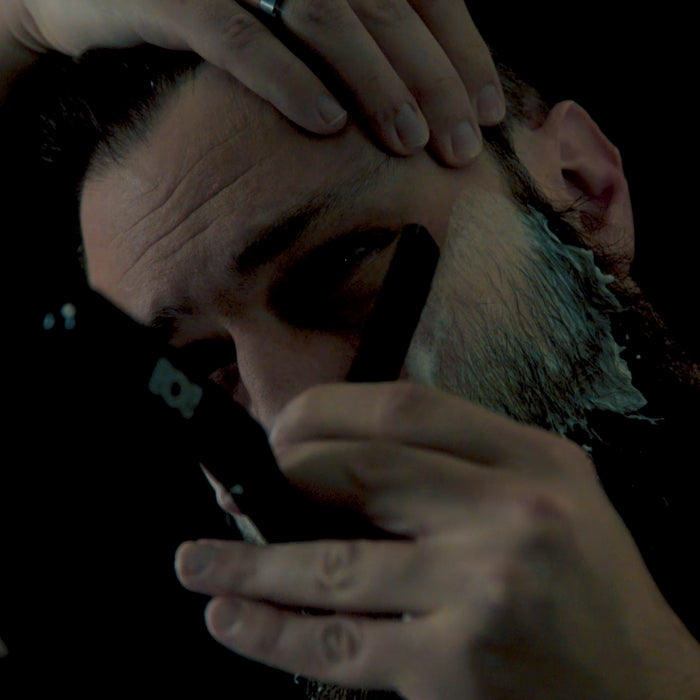
Proceed with your shave, generally making your first pass in a north to south direction ending at the lowest point of your neck that you wish to shave. After finishing the first pass, pick up your brush, adding just a touch of additional hot water if needed, and re-lather just as before. The second lathering need not be as thorough as the first since at this point there should be no beard remaining, only stubble. The purpose of the second lathering is primarily to provide lubrication for the second south to north pass of the razor. After completing the second pass, wet the fingertips of the off hand and feel around for any area that may have been missed. A quick dab of lather and an oblique (southwest to northeast) pass of the razor on the missed spot should be all that is needed.
As stated earlier, this procedure includes all of the basics and should serve most users very well – It’s worked well for me for 40 years using every kind of razor ever made. You may find the need to modify it somewhat to work well with the particular water quality, brush, or soap/cream you use.
Don’t short-change yourself on shave quality by skimping on the preparation. The best tools won’t necessarily provide the best shave, only a greater potential for a quality outcome – The rest is up to you!
|