How-To and Why ->
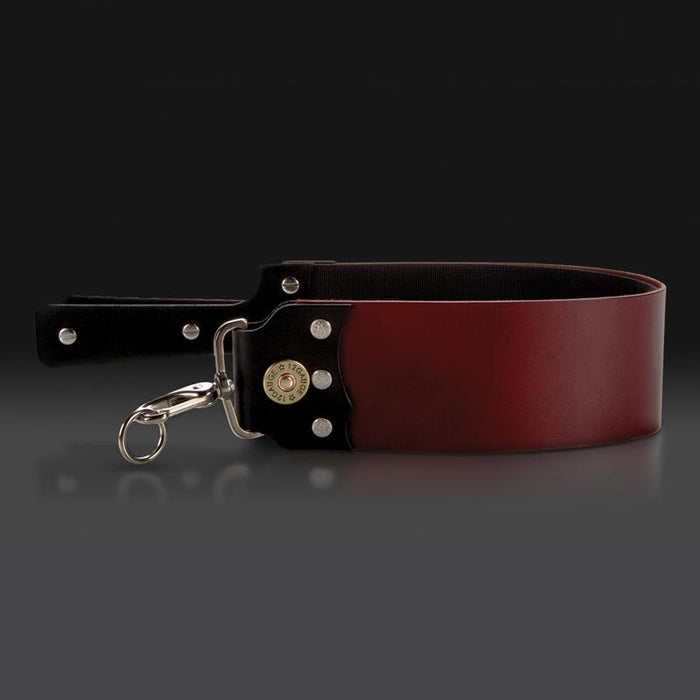
Razor Strops


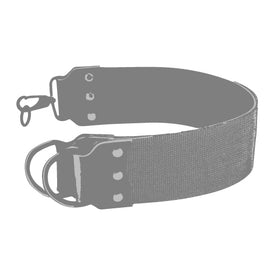
Unlike the hone, which is designed to grind the edge of the razor, the strop is intended to bring the razor to a smooth, whetted edge.


A good strop is made of durable and flexible material, has the proper thickness and texture, and shows a smooth finished surface. Some barbers like a thin strop, whereas others prefer a thick, heavy strop. Most strops are made in pairs, one side being leather and the other side being canvas. The best assurance for a good strop is the reliability of the manufacturer.


Various types of strops are available. Depending upon the material they are made from, they fall into the following groups: French or German, canvas, cowhide, horsehide and imitation leather. Let us consider these one at a time.


French or German Strop 


This uniquely designed strop is hand-held and is a combination strop with leather on one side and a finishing strop on the other.


Canvas Strop


The Canvas or Linen Strop is generally used before final stropping on the leather strop. It's purpose is to provide a very honing to the razor's edge, replacing most of the keenness which was lost in it's last use. While it has proven effective for this purpose, it will not sharpen a dull razor but will extend the period between honings.


This strop is composed of high quality linen or silk woven into a fine or coarse texture.


A fine-textured linen strop is most desirable for putting a lasting edge on a razor. To obtain the best results, a new canvas strop should be thoroughly broken in. A daily hand finish will keep its surface smooth and ready for stropping. For a hand finish, the canvas strop is given the following treatment:

  • Attach the swivel end of the strop to a fixed point, such as a nail.
  • Lay the strop flat on a smooth and level surface and hold the unsecured end firmly.
  • Rub a bar of dry soap over the strop, working it well into the grain of the canvas.
  • Rub a smooth glass bottle over strop several times, each time forcing the soap into the grain and also removing excess soap.

Many modern Linen strops often come from the manufacturer pre-treated with a very fine chalk-based abrasive. These strops are generally quite stiff when new and do not require any break-in though their performance does improve with use. Over time the chalk abrasive may be worn away. It can be replaced with Linen Strop Paste, which is itself chalk-based and usually is either white or gray in color.


The cowhide strop was originally imported from Russia. To this day it still bears the name Russian strop, even though it may be manufactured in this country. This name usually implies that the strop is made of cowhide and that the Russian method of tanning was employed. 


The cowhide or Russian strop is perhaps the most common strop in use today. When new, it requires a daily hand finish until such time as it is thoroughly broken in. There are several ways of breaking in a Russian strop. A method frequently used is as follows: 


  • 1.             Rub dry pumice stone over the strop in order to remove the outer nap and develop a smooth surface.
  •  
  • 2.              Rub stiff lather into the strop.
  •  
  • 3.              Rub dry pumice stone over the strop until smooth.
  •  
  • 4.              Clean off the strop.
  •  
  • 4.              Rub fresh stiff lather into the strop.
  •  
  • 5.             Rub a smooth glass bottle over the strop several times until a smooth surface is developed.

Another method of breaking in a Russian strop is to omit the pumice stone. Instead, stiff lather is rubbed into the strop with the aid of a smooth glass bottle or with the palm of the hand.


Horsehide Strop


Strops made of horsehide are divided into two main groups: ordinary horsehide strop and the shell.


An ordinary horsehide strop is of medium grade and has a fine grain. It has a tendency to be very smooth. In this condition it does not readily impart the proper edge to the razor. For this reason, it is not recom­mended for professional use. However, it is suitable for private use.


The other type of horsehide strop is called shell or Russian shell. This is a high quality strop taken from the rump area of the horse. Although it is quite expensive, it makes one of the best possible strops for professional use. It always remains smooth and requires very little, if any, breaking in.


Imitation Leather Strop


This type of strop has not proven too satisfactory. Be­cause of the availability of high-quality strops, it is wise to avoid strops made of imitation leather.


Strop Dressing


Strop dressing serves a useful purpose in the barbershop. It cleans and conditions the leather strop, preserving the finish and thus improves the draw and sharpen­ing qualities. For proper use, apply a very small amount of dressing to the leather strop. Rub well into the pores of the leather using the ball of the hand and remove the surplus. Always wait at least 24 hours between applications or before use.


Strop Paste


Strop pastes are used to refresh the edge of a mildly dull razor and can extend the period between honing. Available in varying grades of abrasiveness each designed to perform a particular task from sharpening to polishing. The greatest disadvantage of strop pastes is that once applied to the strop that particular strop cannot be used for any other purpose without first being thoroughly cleaned. One method is to have multiple strops, each dedicated to a specific use. It is not uncommon to see a three or four part strop in many barbershops.

ClassicShaving.com editor’s note:

The above information has been taken from the Standard Textbook of Professional Barber-Styling. Copyright 1938, 54, 59, 77, 83, Milady Publishing Company, Tarrytown, NY.  To protect the publisher’s copyright the information above is a paraphrased version of the actual text.